Ivermectin Side Effects: Complete Safety Guide & Warning Signs
2026-01-17
•Dr. Sarah Chen, MD

While ivermectin is generally well-tolerated, understanding potential side effects is essential for safe use. This comprehensive guide covers everything from common mild reactions to serious warning signs requiring immediate medical attention.
[!IMPORTANT] Always report any concerning symptoms to your healthcare provider. This guide is for educational purposes and does not replace medical advice.
Quick Safety Overview
Most Common (Greater than 1%):
- Dizziness, headache
- Nausea, diarrhea
- Fatigue, weakness
- Skin rash or itching
Serious (Rare):
- Severe skin reactions
- Vision changes
- Seizures or confusion
- Difficulty breathing
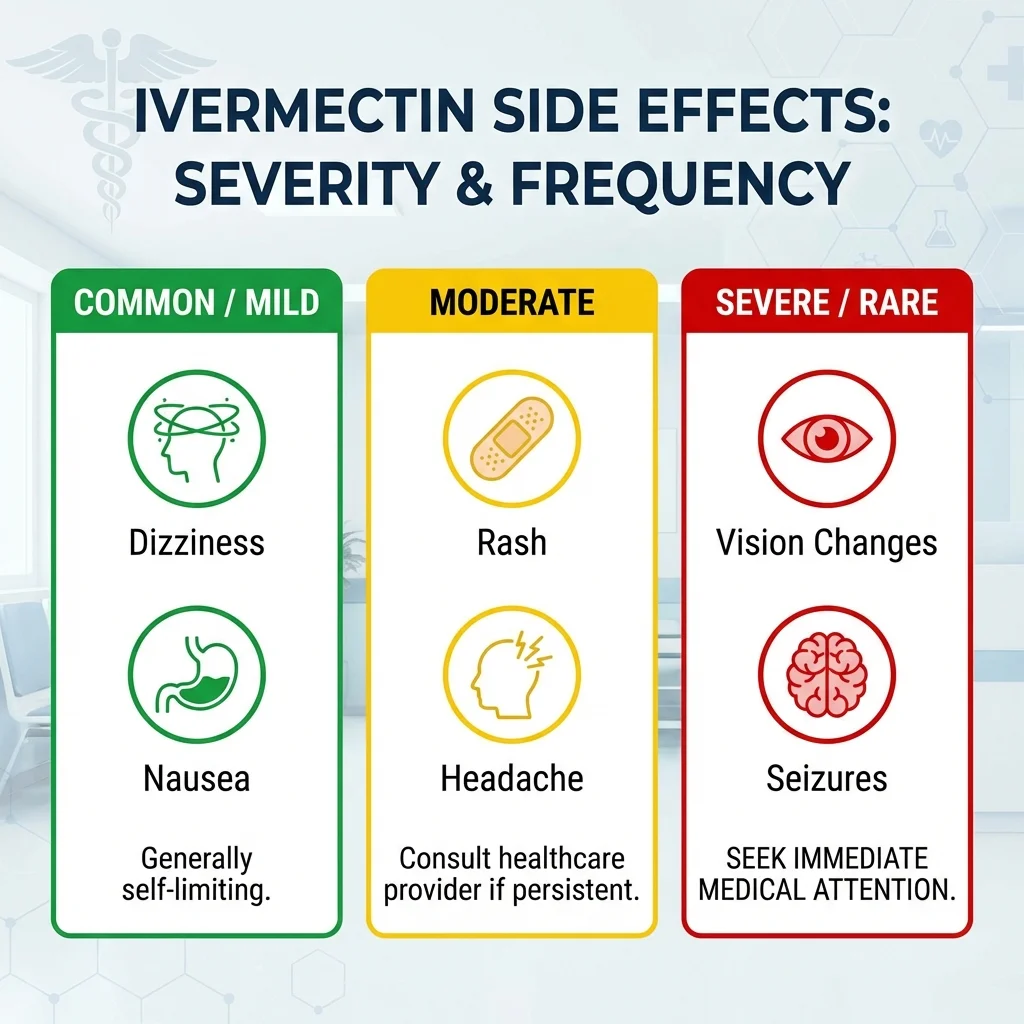
For proper dosing information, see our ivermectin dosage guide.
Common Side Effects
Neurological Effects
Dizziness and Lightheadedness (Most Common):
- Affects up to 10% of patients
- Usually mild and temporary
- More common in elderly patients
Management Tips:
- Stand up slowly from sitting or lying positions
- Avoid driving if experiencing dizziness
- Stay well-hydrated
- Usually resolves within 24-48 hours
Headache:
- Generally mild to moderate
- Can be managed with acetaminophen
- Contact doctor if severe or persistent
Gastrointestinal Symptoms
Nausea and Vomiting:
- Common but usually mild
- Taking with small amount of water may help
- Anti-nausea medication can be used if needed
Diarrhea:
- Temporary and self-limiting
- Stay hydrated
- Contact doctor if severe or bloody
Abdominal Pain:
- Usually mild cramping
- May be related to parasite die-off
- Should improve within a few days
Loss of Appetite:
- Temporary decrease in hunger
- Normal eating usually resumes within days
- Ensure adequate hydration
Dermatological Reactions
Skin Rash and Itching:
- May be mild drug reaction or parasite die-off (Mazzotti reaction)
- Usually resolves on its own
- Antihistamines may provide relief
When to Worry:
- Severe rash with blistering
- Rash spreading rapidly
- Accompanied by fever or facial swelling
General Symptoms
Fatigue and Weakness:
- Common after treatment
- Allow body to rest and recover
- Should improve within a week
Muscle or Joint Pain:
- Mild aches are common
- Over-the-counter pain relievers usually sufficient
- More common with treatments for onchocerciasis
Mazzotti Reaction (For Onchocerciasis Treatment)
When treating river blindness, side effects are often related to dying parasites rather than the drug itself.
What Is Mazzotti Reaction?
Symptoms:
- Fever and chills
- Intense itching
- Swollen and tender lymph nodes
- Joint and muscle pain
- Rapid heartbeat (tachycardia)
- Eye inflammation or irritation
- Facial swelling
- Weakness
Timeline:
- Usually begins within 24-48 hours of treatment
- Peaks at 2-3 days
- Gradually resolves over 1-2 weeks
Management:
- Antihistamines for itching
- Acetaminophen for fever and pain
- Corticosteroids for severe reactions
- Usually more severe with first treatment, milder with subsequent doses
This is a NORMAL reaction to successful treatment and indicates parasites are dying. However, severe reactions should be reported to your healthcare provider.
Serious Side Effects (Require Immediate Medical Attention)
Severe Skin Reactions
Stevens-Johnson Syndrome (SJS) / Toxic Epidermal Necrolysis (TEN):
Warning Signs:
- Sudden widespread rash with blistering
- Peeling skin
- Sores in mouth, eyes, or genitals
- Fever and flu-like symptoms
Action: Call 911 or seek emergency care immediately. This is a life-threatening condition.
Neurological Emergencies
Seizures or Convulsions:
- More likely with high doses or overdose
- Risk factors: history of seizures, co-administered drugs affecting blood-brain barrier
Severe Confusion or Altered Mental Status:
- Disorientation
- Hallucinations
- Extreme drowsiness or difficulty waking
Loss of Consciousness:
- Fainting
- Unresponsiveness
- Requires immediate emergency care
Vision Problems
Eye-Related Warning Signs:
- Sudden vision changes or loss
- Severe eye pain
- Light sensitivity with pain
- Blurred vision that doesn't improve
Note: Some mild eye irritation may occur with onchocerciasis treatment (Mazzotti reaction) but sudden severe changes need immediate evaluation.
Cardiovascular Symptoms
Severe Rapid Heartbeat:
- Heart rate greater than 120 bpm at rest
- Accompanied by chest pain or shortness of breath
Dangerously Low Blood Pressure:
- Extreme dizziness
- Fainting
- Cold, clammy skin
Respiratory Distress
Difficulty Breathing:
- Shortness of breath
- Wheezing
- Chest tightness
- Possible allergic reaction (anaphylaxis)
Action: Call 911 if experiencing breathing difficulties.
Special Risk Populations
Patients with Loa loa Infection
[!CAUTION] Critical Warning: Patients with Loa loa (African eye worm) infection are at risk of serious and potentially fatal encephalopathy when treated with ivermectin.
Geographic Risk:
- Central and West Africa
- Pre-treatment screening essential in endemic areas
Symptoms of Encephalopathy:
- Severe confusion
- Inability to walk
- Coma
- Death in severe cases
Prevention:
- Screen for Loa loa before treatment
- Alternative treatments if positive
- Close monitoring if treatment necessary
Patients with Liver Disease
Risks:
- Ivermectin is metabolized by liver
- Severe liver disease may increase drug levels
- Higher risk of side effects
Monitoring:
- Liver function tests before and during treatment
- Watch for signs of toxicity
- Dose adjustment may be needed
Immunocompromised Patients
Increased Risks:
- Strongyloidiasis hyperinfection
- May need repeated treatments
- Higher risk of disseminated infection
Extra Monitoring:
- More frequent follow-up
- Extended monitoring periods
- Watch for treatment failure
Drug Interactions and Enhanced Side Effects
Medications That Increase Ivermectin Levels
CYP3A4 Inhibitors:
- Ketoconazole, itraconazole (antifungals)
- Erythromycin, clarithromycin (antibiotics)
- Ritonavir (antiretroviral)
Effect: Higher ivermectin levels = increased side effects
P-glycoprotein Inhibitors:
- Cyclosporine
- Verapamil
- Que
rcetin
Risk: Enhanced CNS toxicity
Medications Affected by Ivermectin
Warfarin ( blood thinner):
- Ivermectin may increase bleeding risk
- Monitor INR closely
- May need dose adjustment
Digoxin (heart medication):
- Ivermectin may increase dig oxin levels
- Watch for signs of dig oxin toxicity
- Monitor levels
Drugs Increasing CNS Side Effects
Central Nervous System Depressants:
- Benzodiazepines (alprazolam, diazepam)
- Opioids
- Sedating antihistamines
- Alcohol
Effect: Enhanced dizziness, drowsiness, confusion
Minimizing Side Effects
Before Taking Ivermectin
-
Inform Your Doctor:
- All medications and supplements
- Medical conditions
- Allergies
- Recent travel history
-
Pre-treatment Screening:
- Loa loa if in endemic area
- Liver function if history of liver disease
- Pregnancy test if applicable
During Treatment
-
Proper Administration:
- Take on empty stomach
- Full glass of water
- Exact prescribed dose
-
Activity Modifications:
- Avoid driving if dizzy
- No alcohol
- Rest as needed
-
Hydration:
- Drink plenty of fluids
- Helps with both effectiveness and reducing side effects
After Treatment
-
Monitor Symptoms:
- Keep diary of any reactions
- Note severity and duration
- Report problems to doctor
-
Follow-up:
- Attend all scheduled appointments
- Complete follow-up testing
- Report persistent symptoms
When to Contact Your Healthcare Provider
Call Your Doctor If You Experience:
- Side effects lasting more than a week
- Severe diarrhea or vomiting
- Worsening symptoms despite treatment
- New unexplained symptoms
- Rash that spreads or worsens
Seek Emergency Care (Call 911) For:
- Difficulty breathing
- Severe allergic reaction (anaphylaxis)
- Seizures or loss of consciousness
- Chest pain
- Severe confusion or inability to wake
- Signs of Stevens-Johnson Syndrome
Reporting Side Effects
FDA MedWatch:
- Report serious adverse events
- Helps improve drug safety
- Call 1-800-FDA-1088 or visit www.fda.gov/medwatch
Why Report:
- Contributes to safety data
- May help other patients
- Particularly important for rare reactions
Frequently Asked Questions
Are side effects worse with higher doses?
Yes. Side effects are generally dose-dependent. Higher doses increase both the frequency and severity of adverse reactions. This is why proper weight-based dosing is critical.
How long do side effects last?
Most common side effects resolve within 2-5 days. Mazzotti reaction from onchocerciasis treatment may last 1-2 weeks but gradually improves.
Can I take pain relievers for side effects?
Acetaminophen (Tylenol) is usually safe for headache, fever, or body aches. Avoid NSAIDs like ibuprofen initially as they may mask serious symptoms. Always check with your healthcare provider.
Is ivermectin safe for long-term use?
For approved indications like annual treatment of onchocerciasis, ivermectin has been used safely for decades. However, regular monitoring is important.
What's the difference between drug side effects and allergic reactions?
Side effects are expected pharmacological responses. Allergic reactions involve the immune system and may include hives, swelling, difficulty breathing, and can be life-threatening.
Related Resources
- Ivermectin Uses - Learn what conditions ivermectin treats
- Dosage Guide - Proper dosing reduces side effects
- Comprehensive Guide - Complete ivermectin information
Medical Disclaimer
[!CAUTION] This side effects guide is for educational purposes only. It does not include all possible side effects. Always read the medication guide provided with your prescription and discuss any concerns with your healthcare provider. Seek immediate medical attention for serious reactions.
References
- FDA. (2024). Stromectol (Ivermectin) Adverse Reactions. U.S. Food and Drug Administration.
- Merck. (2026). Stromectol Prescribing Information: Warnings and Precautions.
- Drugs.com. (2026). Ivermectin Side Effects in Detail.
- Medscape. (2026). Ivermectin Toxicity and Adverse Effects.
- WHO. (2026). Safety Monitoring of Ivermectin in Mass Drug Administration Programs.
Last Updated: January 17, 2026
Author: Dr. Sarah Chen, MD - Board-certified Infectious Disease Specialist
Reviewed By: Medical Editorial Team